
GMO analysis
From screening to event identification and quantitative analysis
SYNTOL solutions for GMO analysis cover DNA extraction from plant, food, raw-material, feed, and seed matrices, screening of regulatory sequences, identification of transformation events, and quantitative analysis where supported by the specific assay.
The page helps laboratories choose the next analytical step: prepare DNA, perform screening, confirm a transformation event, or carry out quantitative analysis. The regulatory status of an event is treated separately and must always be tied to a date and jurisdiction.
Laboratory tasks
- extract DNA from plant material, food/raw materials, feed, or seeds;
- automate DNA extraction for documented sample types;
- confirm suitable plant DNA or an endogenous target;
- screen 35S, FMV, NOS, SsuAra/E9, nptII, and other supported targets;
- proceed from a positive screen to identification of a specific event or group of events;
- perform semiquantitative or quantitative analysis only when included in the assay's intended use;
- verify instrument compatibility and access current documentation.
Analytical sequence
DNA extraction
Depending on the matrix, use Sorb-GMO-A, Sorb-GMO-B, or automated Sorb-GMO-B-Automatic.
Screening
Determine plant/endogenous targets and regulatory sequences covered by the chosen kit.
Identification
Where required, use real-time PCR for a specific transformation event or multiple events.
Quantitative analysis
Show only active assays whose intended use includes quantitative determination.
The portfolio includes manual and automated DNA extraction, screening assays, event-specific and multi-event identification, and products for quantitative analysis. Supporting plant-identification assays help assess sample suitability and guide the next analytical step.
The principal methods are DNA extraction, automated magnetic extraction, and real-time PCR. Screening, event identification, and quantitative analysis are distinct analytical tasks built on the same methodological foundation.
Products for key stages
Key sample-preparation products include Sorb-GMO-A, Sorb-GMO-B, and Sorb-GMO-B-Automatic. GM-415 Plant/35S+FMV/NOS Screening can illustrate the screening stage. The current range of event-identification and quantitative-analysis assays is available in the catalog and updates with the product line.
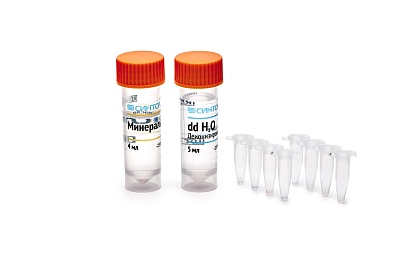
Reagent kit "Maize identification Screen 4"for detection of, identification of and semi-quantitative analysis of 4 lines genetically modified (GM) maize in food products, food raw…
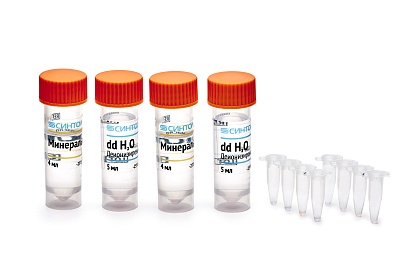
Reagent kit "Maize identification Screen 11"for detection of, identification of and semi-quantitative analysis of 11 lines genetically modified (GM) maize in food products, food…
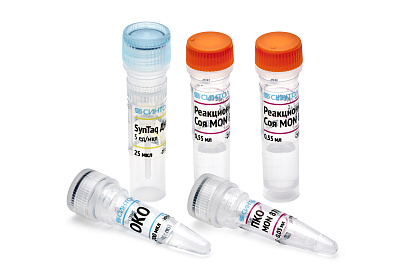
Reagent kit "Soybean MON 87705 identification"
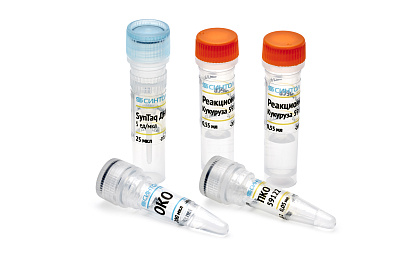
Reagent kit "Maize 59122 identification"
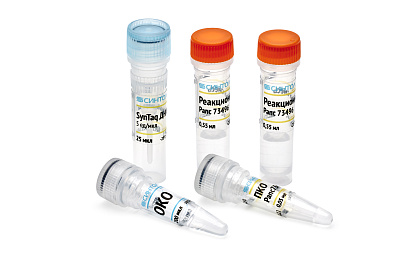
Reagent kit «Rapeseed 73496 identification»
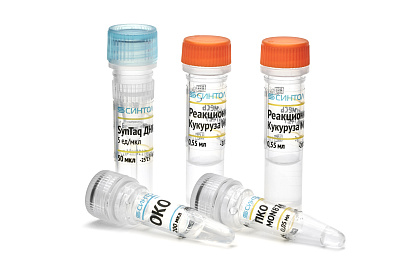
Reagent kit "Maize MON87427 identification"
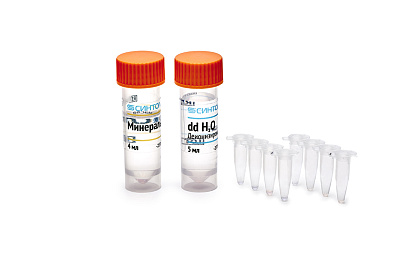
"Soybean Identification Screen 5" reagent kit
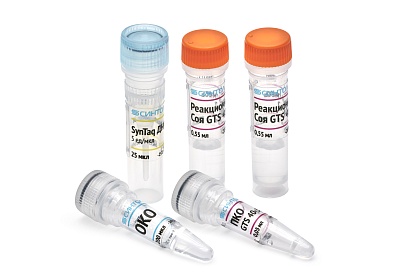
Reagent kit "Soybean GTS 40-3-2 identification"
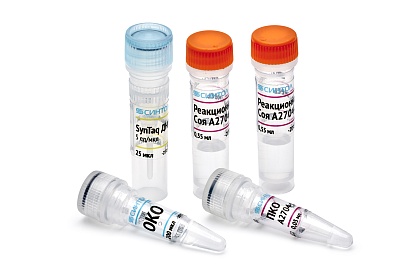
Reagent kit "Soybean A2704-12 identification"
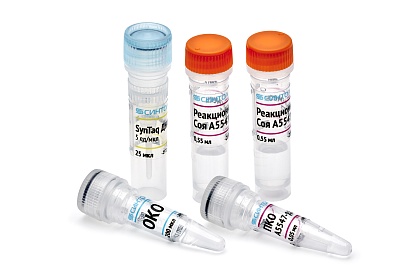
Reagent kit "Soybean A5547-127 identification"
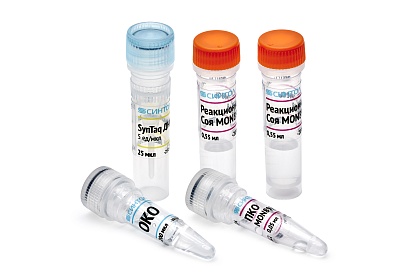
Reagent kit "Soybean MON89788 identification"
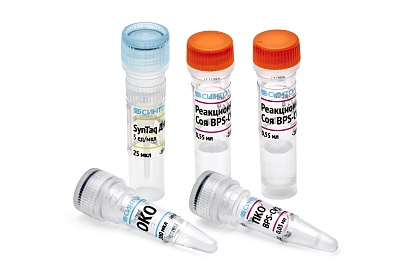
Reagent kit "Soybean BPS-CV127-9 identification"
Show current assortment107
Move from the task to concrete resources
For analysis GMO
Open material↗“Sorb-GMO-A” and “Sorb-GMO-B” – reagent kits for DNA extraction from food products, plant raw material and feed
Open material↗User Training
Practical user training for working with reagents, protocols and laboratory scenarios.
Open service↗Regulatory context and limitations
The regulatory status of a transformation event is stated only with a date and jurisdiction. Sensitivity, specificity, turnaround, and semiquantitative thresholds belong to the specific assay; obsolete portfolio-coverage figures are not used.
Select an analytical scheme
Primary action: “Select a GMO analysis scheme.” Choose screening, event identification, quantitative analysis, DNA extraction, or automation. Additional actions: “Check compatibility” and “Request training.”
Start a request