
GMO analysis
From screening to event identification and quantitative analysis
SYNTOL solutions for GMO analysis cover DNA extraction from plant, food, raw-material, feed, and seed matrices, screening of regulatory sequences, identification of transformation events, and quantitative analysis where supported by the specific assay.
The page helps laboratories choose the next analytical step: prepare DNA, perform screening, confirm a transformation event, or carry out quantitative analysis. The regulatory status of an event is treated separately and must always be tied to a date and jurisdiction.
Laboratory tasks
- extract DNA from plant material, food/raw materials, feed, or seeds;
- automate DNA extraction for documented sample types;
- confirm suitable plant DNA or an endogenous target;
- screen 35S, FMV, NOS, SsuAra/E9, nptII, and other supported targets;
- proceed from a positive screen to identification of a specific event or group of events;
- perform semiquantitative or quantitative analysis only when included in the assay's intended use;
- verify instrument compatibility and access current documentation.
Analytical sequence
DNA extraction
Depending on the matrix, use Sorb-GMO-A, Sorb-GMO-B, or automated Sorb-GMO-B-Automatic.
Screening
Determine plant/endogenous targets and regulatory sequences covered by the chosen kit.
Identification
Where required, use real-time PCR for a specific transformation event or multiple events.
Quantitative analysis
Show only active assays whose intended use includes quantitative determination.
The portfolio includes manual and automated DNA extraction, screening assays, event-specific and multi-event identification, and products for quantitative analysis. Supporting plant-identification assays help assess sample suitability and guide the next analytical step.
The principal methods are DNA extraction, automated magnetic extraction, and real-time PCR. Screening, event identification, and quantitative analysis are distinct analytical tasks built on the same methodological foundation.
Products for key stages
Key sample-preparation products include Sorb-GMO-A, Sorb-GMO-B, and Sorb-GMO-B-Automatic. GM-415 Plant/35S+FMV/NOS Screening can illustrate the screening stage. The current range of event-identification and quantitative-analysis assays is available in the catalog and updates with the product line.
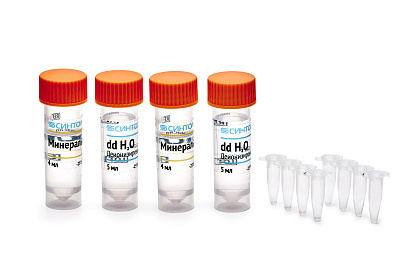
Reagent kit "Soybean identification Screen 11"for detection of, identification of and semi-quantitative analysis of 11 lines genetically modified (GM) soybean in food products…
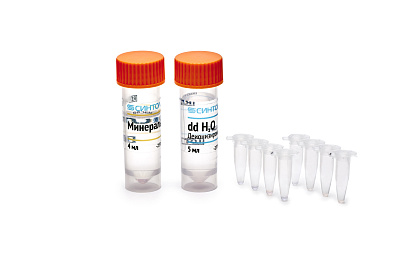
Reagent kit "Soybean identification Screen 6"for detection of, identification of and semi-quantitative analysis of 6 lines genetically modified (GM) soybean in food products, food…
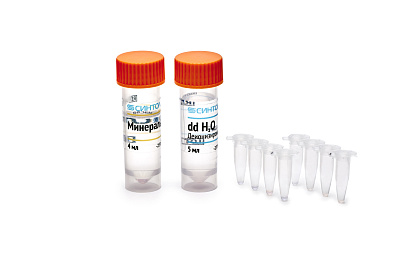
Reagent kit "Soybean identification Screen 5"for detection of, identification of and semi-quantitative analysis of 5 lines genetically modified (GM) soybean in food products, food…
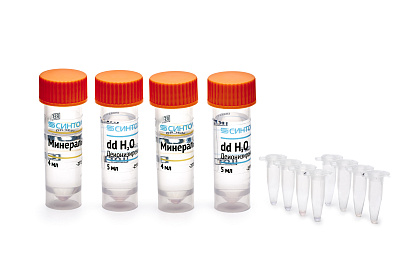
Reagent kit "Rapeseed identification Screen 8"for detection of, identification of and semi-quantitative analysis of 8 lines genetically modified (GM) rapeseed in food products…
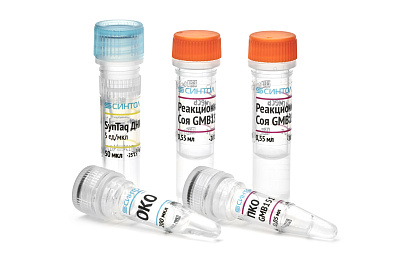
Reagent kit "Soybean GMB151 identification"
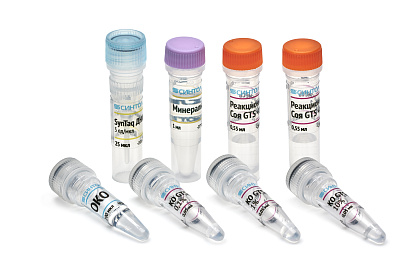
Reagent kit "Soybean GTS 40-3-2 quantification"
Show current assortment107
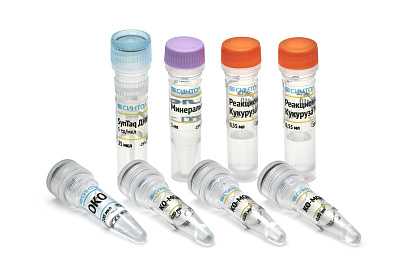
Reagent kit "Maize / MON 810 quantification"
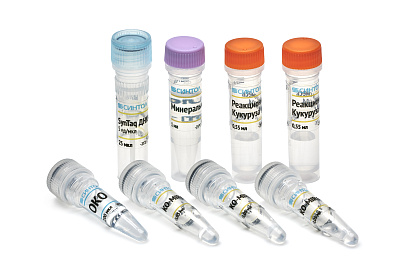
Reagent kit "Maize / MIR 604 quantification"
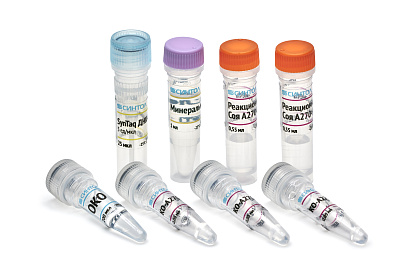
Reagent kit "Soybean A2704-12 quantification"
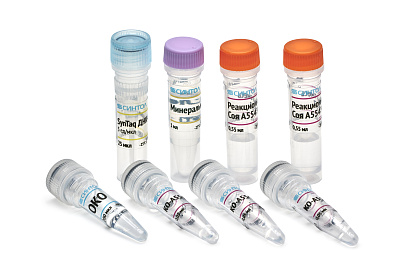
Reagent kit "Soybean A5547-127 quantification"
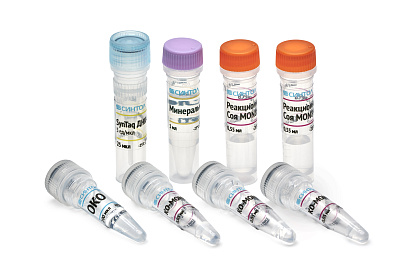
Reagent kit "Soybean MON89788 quantification"
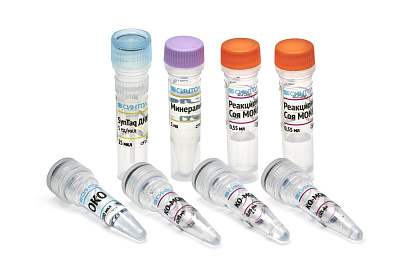
Reagent kit "Soybean MON87701 quantification"
Move from the task to concrete resources
For analysis GMO
Open material↗“Sorb-GMO-A” and “Sorb-GMO-B” – reagent kits for DNA extraction from food products, plant raw material and feed
Open material↗User Training
Practical user training for working with reagents, protocols and laboratory scenarios.
Open service↗Regulatory context and limitations
The regulatory status of a transformation event is stated only with a date and jurisdiction. Sensitivity, specificity, turnaround, and semiquantitative thresholds belong to the specific assay; obsolete portfolio-coverage figures are not used.
Select an analytical scheme
Primary action: “Select a GMO analysis scheme.” Choose screening, event identification, quantitative analysis, DNA extraction, or automation. Additional actions: “Check compatibility” and “Request training.”
Start a request